Africa Needs Sovereignty Over Its Own Rails.
Africa does not need a new payment standard. It needs operational control over how value moves between its own markets. The infrastructure for that sovereignty already exists.
JUN 22 - 5 MIN READ

When money moves between two African countries today, it frequently travels through New York.
Not because New York is geographically between them, not because the financial systems of the two African countries are incompatible, but because the global payment architecture that governs cross-border settlement was built around USD liquidity, and African markets were integrated into that architecture as participants rather than as designers. The result is a payment system in which intra-African commerce is structurally dependent on infrastructure that sits outside Africa, priced in a currency that most African transactions do not naturally require, and controlled by institutions whose primary obligations run to their shareholders rather than to the African economies they service.
This is not a technical problem. It is a sovereignty problem. And the solution is not a new payment standard. It is African markets taking operational control of how value moves between them.
How the Dependency Was Built
The USD dependency in African cross-border payment infrastructure was not designed with malicious intent. It was built pragmatically, by African financial institutions that needed access to international settlement capability and found that the only available path ran through correspondent banking relationships denominated in USD.
This was a reasonable solution to a real problem at a specific point in history. When the alternative was no reliable cross-border settlement capability at all, routing through USD correspondent banks was not a concession. It was the infrastructure.
The problem is that the world has changed in ways that make that architecture increasingly costly and increasingly unnecessary, while the infrastructure itself has not changed to reflect that reality.
African domestic payment rails have matured significantly. NIP in Nigeria processes hundreds of millions of real-time transfers annually. M-Pesa in Kenya reaches a majority of the adult population. Mobile money networks across the XOF region provide financial infrastructure to tens of millions of people who were not served by formal banking. These are not developing technologies. They are mature, trusted, deeply adopted systems that function at national scale.
The technology required to connect these rails to each other exists. The regulatory frameworks required to govern cross-border connectivity between them are developing across the continent. What has not kept pace is the commercial infrastructure that actually executes the connection. The correspondent banking architecture inherited from a different era of African financial integration remains in place, routing intra-African value through external currency structures because the alternative has not yet been built at the required depth and scale.
What Sovereignty Over African Rails Actually Means
Payment sovereignty is not a political concept dressed in financial language. It is a precise operational description of who controls the critical infrastructure through which value moves.
When a Nigerian business pays a Kenyan supplier through a USD correspondent chain, control over that transaction sits with institutions that have no obligation to prioritise African commercial interests. The rate applied at conversion is set by those institutions. The timeline of settlement is determined by their operational processes. The fees extracted at each leg of the chain reflect their commercial requirements. The African parties in the transaction are price takers, not decision makers.
When that same transaction routes through a direct connection between Nigerian and Kenyan local rails, the dynamics change. The settlement timeline reflects the speed of NIP and M-Pesa, both of which are significantly faster than correspondent banking chains. The FX conversion, where necessary, can be sourced competitively at institutional rates rather than accepted passively at whatever spread the correspondent chain applies. The fees paid stay within the African payment ecosystem rather than flowing to external intermediaries.
This is what payment sovereignty means in practice, not the absence of FX conversion, because currencies will continue to differ across African markets. Not the elimination of all international relationships, because African businesses operate in a global economy. But the shift from structural dependency on external infrastructure to operational control over the rails that move value within and between African markets.
Why a New Standard Is Not the Answer
The instinct in payment policy circles when facing infrastructure fragmentation is to propose a new standard. A continental payment protocol. A unified African digital currency. A pan-African settlement system built from scratch.
These proposals share a common assumption: that the problem is the absence of the right technical standard, and that agreeing on a standard will produce the infrastructure. That assumption is wrong in an important way.
The rails that need to be connected already exist. NIP exists. M-Pesa exists. The XOF mobile money ecosystem exists. PIX in Brazil, UPI in India, Faster Payments in the UK exist. These are not inferior versions of the infrastructure that needs to be built. They are the infrastructure. The problem is not their absence. The problem is their disconnection.
A new continental standard does not solve the disconnection problem. It adds another layer to a landscape that already has enough layers and not enough connectivity between them. The African payment sovereignty project does not require a new standard. It requires a connectivity and governance layer that makes the standards that exist interoperable with each other for businesses operating across borders.
That layer needs to sit above the existing rails, not replace them. It needs to route transactions dynamically across available paths, embed compliance logic per jurisdiction automatically, manage FX conversion transparently at institutional rates, and settle predictably without requiring businesses to maintain separate relationships per market.
The Commercial Infrastructure of Sovereignty
Payment sovereignty in Africa will not be delivered by policy declarations or continental agreements, though both have a role in enabling it. It will be delivered by commercial infrastructure companies that build the connectivity layer at the required technical depth, obtain the regulatory credibility to operate across multiple jurisdictions, and create the commercial model that makes the network sustainable.
This is the infrastructure moment African payment development has been building toward. The rails exist. The regulatory frameworks are maturing. The technology is available. What has been missing is the commercial infrastructure layer that connects them into a coherent system that African businesses can actually use.
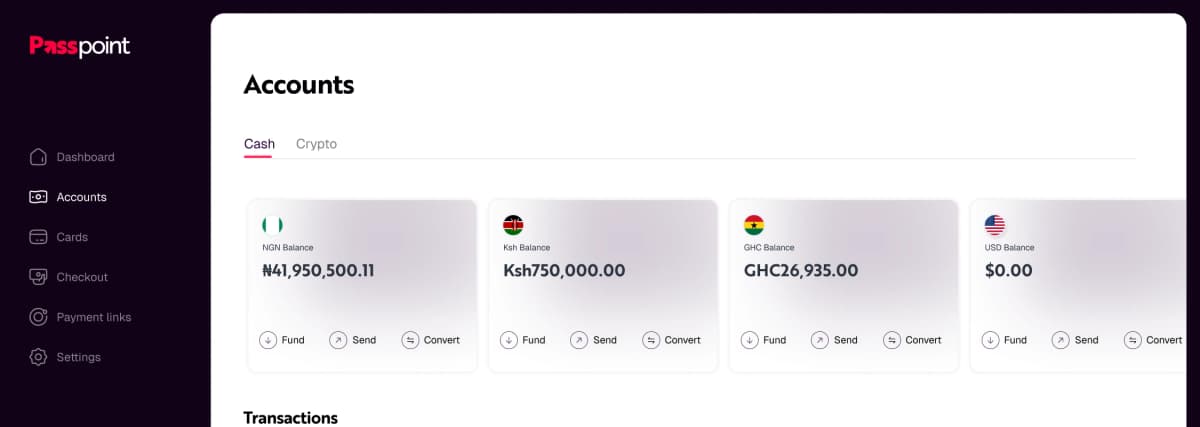
Passpoint is the financial orchestration layer building that connection. Forty-two corridors across Africa, Europe, and the G20, governed through a single integration that makes local African rails globally usable without routing intra-African value through external currency structures that add cost, delay, and dependency without adding value.
The next chapter of African payment infrastructure is not a new standard. It is sovereignty over the rails Africa has already built.