The Next Global Payment Network Will Be Built by Connecting Local Rails
The world does not need one payment method for everyone. It needs a way to connect the payment methods each market already trusts. The next global payment network will be built by solving that connectivity problem.
MAY 20 - 3 MIN READ

For decades, the default assumption in global payments was that scale required standardisation. If you wanted to reach customers in multiple countries, you needed an infrastructure that worked the same way in all of them. Cards became that infrastructure, and for a long time the assumption held because cards were the only viable global bridge available.
That assumption is now worth examining carefully, because the world has changed in ways that make it less true than it used to be.
Local payment systems are stronger than they have ever been. Domestic bank transfer rails, instant payment networks, mobile money infrastructure, and account-to-account payment systems have matured to the point where they are the primary payment method for significant portions of the global population. The people who use these systems do not use them because they lack access to cards. In many cases they use them because they are genuinely better: faster, lower cost, more trusted, and more deeply integrated into the financial habits of their daily lives.
The infrastructure challenge this creates is real and underappreciated: these systems were built to solve domestic payment problems, and they do not naturally interoperate across borders.
Why Domestic Excellence Does Not Equal Global Connectivity
The rails that have been built across African, Asian, Latin American, and European markets are not inferior versions of global payment infrastructure. In important respects they are superior to the global infrastructure that preceded them in their specific markets.
NIP in Nigeria processes real-time bank transfers at a scale and speed that was not possible for Nigerian businesses before its introduction. M-Pesa in Kenya reaches a population that formal banking infrastructure left behind, with reliability and adoption rates that established financial institutions have not matched. PIX in Brazil became the dominant payment method in its market faster than any other payment system in the country's history. UPI in India handles transaction volumes that exceed many of the world's largest card networks.
These are not emerging technologies being tested at the margins. They are mature infrastructure operating at national scale, trusted by hundreds of millions of people, and deeply embedded in the commercial fabric of their respective markets.
The limitation is not their quality. It is their scope. Each was designed to solve a domestic problem in a domestic market. The regulatory framework, the currency denomination, the technical architecture, and the commercial relationships that make each rail work are all calibrated for a specific national context. They were not built to be components of a global payment network, and they do not behave like components of a global payment network without a connectivity layer that makes them interoperable.
The Gap This Creates for Businesses
A business expanding across markets cannot simply rely on the strength of each local rail. It must integrate into each one separately, negotiate separate provider relationships for each market, manage different settlement timelines and currencies across multiple dashboards, handle compliance requirements that vary by jurisdiction, and rebuild significant portions of its payment operational infrastructure every time it enters a new geography.
This creates a compounding operational burden that grows with every market added. A business operating in one market manages one payment integration. A business operating in five markets typically manages five integrations, five reconciliation processes, five compliance tracks, and five sets of operational dependencies. The complexity does not scale linearly. It compounds, because every provider-specific process intersects with every other, and the manual work required to manage those intersections grows with each new integration.
The businesses absorbing this complexity are not doing so because they prefer it. They are doing so because the alternative, a single layer that connects all of the local rails they need to reach into a unified operational system, has not historically been available at the depth and coverage required for serious global operations.
That is the gap the market needs to fill, and filling it is one of the most significant infrastructure opportunities in global payments today.
Local on the Front End. Global on the Back End.
The architecture that closes this gap has a clear shape, even if the infrastructure to implement it at scale has taken time to build.
On the customer side, the payment experience should be local. A Nigerian customer should pay by bank transfer through an interface that reflects how Nigerian bank transfers work. A Kenyan customer should pay through M-Pesa in the flow they use every day. A European customer should pay through open banking in their familiar banking environment. The payment method should match the customer's local payment habit, not the global payment infrastructure's assumption about how customers pay.
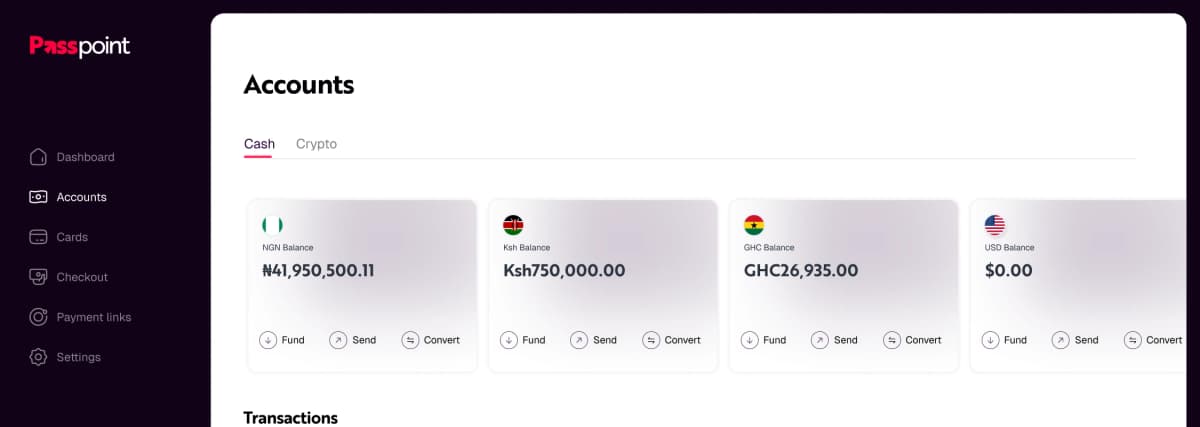
On the business side, everything after the customer's payment should be governed through a single layer. Routing decisions should happen dynamically at transaction time based on real-time performance data across available providers. Settlement should consolidate across markets and currencies into a unified reporting view. Compliance logic should apply automatically per jurisdiction without manual intervention per transaction. FX should be managed actively with full visibility into rates and conversion events. And payouts should flow to recipients through whatever local rail is appropriate for their market, regardless of which rail the original collection came through.
Local on the front end. Global on the back end. The customer experience remains familiar and frictionless. The business operation becomes coherent and scalable.
Why This Is the Right Direction for Global Payments
The alternative to connected local rails is not a return to card dominance. The forces that have produced diverse local rail ecosystems, smartphone penetration, mobile money adoption, regulatory investment in domestic payment infrastructure, and consumer preference for account-based payment methods, are structural and continuing. The diversity of local payment infrastructure is not a transitional phase on the way to global standardisation. It is the direction the market is moving in.
The infrastructure response to that diversity is not to force convergence on a single payment method. It is to build the connectivity layer that makes diversity manageable for businesses operating across markets.
The next global payment network will not be built by issuing more cards or by creating a new universal payment standard that every country adopts. It will be built by connecting the rails that already exist, in the markets where people already use them, through a governance layer that makes them interoperable at scale.
Passpoint is building that layer. Forty-two corridors across Africa, Europe, and the G20, connected through a single integration that makes local rails globally usable for businesses that cannot afford to rebuild their payment infrastructure for every new market they enter.
The rails are already there. The connectivity is what the market is missing.