Cross-Border Payments Don’t Just Need Connectivity. They Need Control.
Cross-border payments need more than connectivity. Financial institutions need the control to scale across markets confidently.
SEP 09 - 5 MIN READ

Cross-Border Payments Don’t Just Need Connectivity. They Need Control.
The cross-border payments conversation has spent years focused on connectivity: more rails, more markets, more payment methods, more integrations.
But for financial institutions expanding across Africa and global markets, connectivity is no longer the hardest problem. Control is.
Connecting to another payment rail may increase reach, but it can also introduce another settlement process, another reconciliation workflow, another set of compliance requirements, another operational partner and another source of risk.
So the real question for a bank, fintech or payment company is no longer simply: Can we connect to this market?
It is: Can we operate across this market without losing visibility, control or compliance as we scale?
That is the infrastructure problem that matters now.
More connections can create more complexity
A business may start with one payment provider in one market. As it expands, the stack grows. A different partner handles another country. A separate integration provides access to a local payment method. Settlement happens differently in each market. Finance reconciles across multiple systems. Operations investigates exceptions across different dashboards. Compliance teams need to understand what is happening across every layer.
Before long, what looked like increased coverage has become increased operational complexity. This is why simply adding integrations is not the same as building scalable payment infrastructure.
The goal should not be to accumulate connections, the goal should be to reduce the complexity created by those connections.
Every payment rail comes with a rulebook
Local payment systems do not exist in a vacuum. Every market operates within its own regulatory environment, settlement structure, operating rules and risk framework. Identity requirements may differ. Transaction limits may differ. Reporting obligations may differ. So may dispute processes, settlement timelines and expectations around fraud monitoring.
An API can provide access to a payment rail. It does not remove the responsibility of understanding how that rail must be operated.
This is where interoperability needs a broader definition. True interoperability is not simply the ability to send money from one system to another. It is the ability to operate across different systems while maintaining the visibility, governance and controls required to manage those transactions responsibly.
Speed alone is not enough
The growth of real-time payments has changed expectations across the industry. Consumers and businesses increasingly expect money to move immediately.
That progress matters, but for financial institutions, speed is only one measure of good infrastructure. When something goes wrong, other questions become just as important. Where is the transaction? What happened at each stage? Who processed it? Why was it rejected? Can the transaction be reconciled? Can an operations or compliance team retrieve a clear record of what occurred?
A payment that moves in seconds but takes days to investigate is not truly efficient infrastructure. Real-time payments also need real-time visibility.
The next challenge is governed interoperability
Africa already has sophisticated payment infrastructure. Nigeria has strong real-time payment rails. Kenya has built one of the world's most recognised mobile-money ecosystems. Similar infrastructure continues to develop across the continent, while major economies globally have their own domestic payment systems. The opportunity is not simply to build more rails, it is to make existing ecosystems work together in a way that institutions can use confidently at scale.
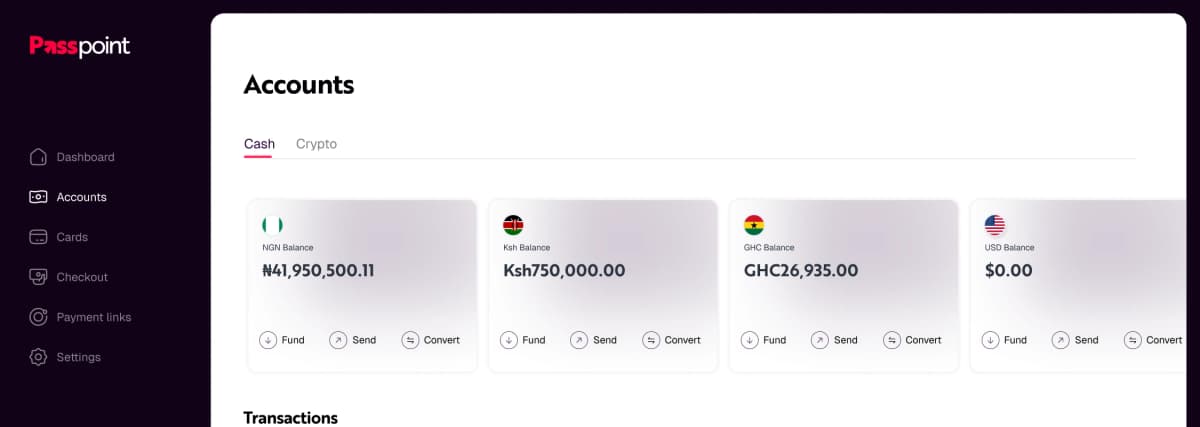
At Passpoint, we think about this as governed interoperability. It means connecting fragmented payment ecosystems while giving financial institutions the visibility and operational control required to manage those connections.
That includes thinking about settlement, reconciliation, transaction monitoring, compliance, permissions, reporting and operational oversight as part of the infrastructure itself rather than as problems to solve afterwards.
Passpoint is being built around this idea: giving financial institutions a programmable connection across local payment ecosystems without forcing them to manage the complexity of every market independently.
Because the future of cross-border payments will not be determined only by who can connect the most markets. It will be determined by who can help institutions operate across those markets without losing control as they scale.