Why USD Settlement Between African Markets Creates Unnecessary Friction
Direct Nigeria-to-Kenya payments shouldn't detour through USD. Traditional routing adds unnecessary FX costs, bank dependencies, and settlement delays. Here is what that friction costs—and how we're closing the gap.
MAY 25 - 5 MIN READ

There is a transaction that happens thousands of times every day across African markets that reveals one of the most significant inefficiencies in cross-border payment infrastructure.
A Nigerian business needs to pay a Kenyan supplier. Both parties are in Africa. Both have access to their domestic payment infrastructure, NIP on the Nigerian side and M-Pesa or a Kenyan bank account on the Kenyan side. The commercial relationship is straightforward, the intent to pay is clear, and the underlying infrastructure in both markets is genuinely capable.
And yet the payment frequently routes through USD-denominated settlement structures, involving correspondent banking dependencies, multiple FX conversion steps, and settlement timelines that reflect the complexity of the chain rather than the speed of the underlying rails.
The customer sees a payment. The infrastructure behind it tells a more complicated story.
Why This Happens
The USD dependency in African cross-border settlement is not a product of poor infrastructure design. It is a product of history.
For decades, the USD has functioned as the dominant global reserve currency and the primary medium of international settlement. Correspondent banking relationships were built around USD liquidity. International settlement systems were structured around USD flows. Financial institutions in African markets built their international operations around access to USD correspondent accounts because that was the only viable path to cross-border settlement capability.
This structure served a genuine purpose when the alternative was no reliable cross-border settlement infrastructure at all. But it was never optimally suited for intra-African commerce, where the underlying transactions often have no natural connection to the United States and where routing settlement through USD introduces costs and delays that reduce the efficiency of every transaction in the chain.
The domestic rails in both Nigeria and Kenya are fast, reliable, and low-cost. The cross-border infrastructure connecting them is significantly less so, and the gap between domestic rail performance and cross-border settlement performance is largely a function of the USD dependency that sits in the middle of the chain.
What This Costs the Businesses Involved
The cost of USD-denominated settlement between African markets is distributed across the chain in ways that affect every party involved.
Merchants on both sides of the transaction pay more than they should. The multiple FX conversion steps that a USD-routed payment involves, from Naira to USD and from USD to shillings, each carry their own spread. The aggregate cost of those spreads is higher than a more direct local-rail-to-local-rail conversion would be, and it is a cost that compounds across every cross-border transaction the business processes.
Payment providers managing these flows carry liquidity pressure. Maintaining USD positions to facilitate African cross-border flows ties up capital in a currency that is not the operational currency of either party in the transaction. That liquidity cost is real and is passed through the chain in the form of processing fees and settlement spreads.
Treasury teams at the businesses involved carry currency exposure they did not ask for and did not need. The moment a Naira payment is converted to USD as part of a settlement chain, the business is exposed to USD-NGN rate movements for however long that USD position is held before it is converted to shillings on the other side. In markets where exchange rates can move meaningfully over short time windows, this exposure is not trivial.
Finance teams deal with reconciliation complexity that spans multiple conversion events, multiple correspondent banking legs, and settlement timelines that can differ significantly from the payment initiation time. Building an accurate picture of what was paid, what was received, and what the effective cost of the transaction was requires assembling information from multiple points in a chain that was not designed with reconciliation transparency as a priority.
What Better Infrastructure Looks Like
The direction that African cross-border payment infrastructure should move toward is clear even if the path to getting there requires deliberate investment.
More direct local rail connectivity between African markets reduces the number of intermediate steps between payment initiation and settlement receipt. When Naira can move more directly to shillings through a layer that connects Nigerian and Kenyan rails without routing through USD as a mandatory intermediate currency, the transaction becomes faster, cheaper, and more predictable for every party involved.
More transparent FX conversion means businesses know exactly what rate was applied, when the conversion happened, and what the mid-market rate was at the time. The opacity that characterises much of the FX handling in correspondent-banking-routed cross-border payments is not an inherent feature of cross-border finance. It is a feature of infrastructure that was not designed with merchant transparency as a requirement. Better infrastructure makes the FX component visible and manageable rather than embedded and unavoidable.
More predictable settlement means businesses can plan cash flow, manage working capital, and make treasury decisions based on reliable information about when funds will arrive and in what form. The settlement uncertainty that comes with correspondent banking chains, where the timeline is an estimate rather than a commitment, is a planning cost that businesses absorb in the form of larger cash buffers and more conservative working capital management.
And active FX management capability means businesses can make informed decisions about when and how to convert across currencies rather than accepting conversion at whatever rate the settlement chain applies at whatever time the settlement chain determines. In markets where exchange rates are volatile and currency positions can shift significantly over short periods, the difference between passive FX absorption and active FX management is a real financial variable that affects bottom line performance.
Why This Matters Beyond Individual Transactions
The USD settlement friction between African markets is not an isolated inefficiency affecting individual businesses. It is a structural feature of cross-border payment infrastructure that affects the cost and complexity of all intra-African commerce.
As African economies deepen their commercial ties, through regional trade agreements, growing intra-African investment flows, and expanding cross-border digital commerce, the payment infrastructure connecting them should reflect and support that integration rather than introducing friction through outdated USD-centric settlement structures.
When intra-African cross-border payments become cheaper, faster, and more transparent, the businesses moving goods, services, and value across African borders become more competitive. The suppliers who receive payment predictably and at lower cost have better cash flow and can offer better terms. The merchants who pay lower effective transaction costs have better margins. The treasury teams with clear visibility into currency positions make better allocation decisions.
Connecting local rails more directly, reducing the USD dependency that adds cost and complexity to intra-African flows, and making FX management active and transparent rather than passive and opaque: these are the infrastructure improvements that compound into meaningful economic outcomes for African businesses and for the broader African commercial ecosystem.
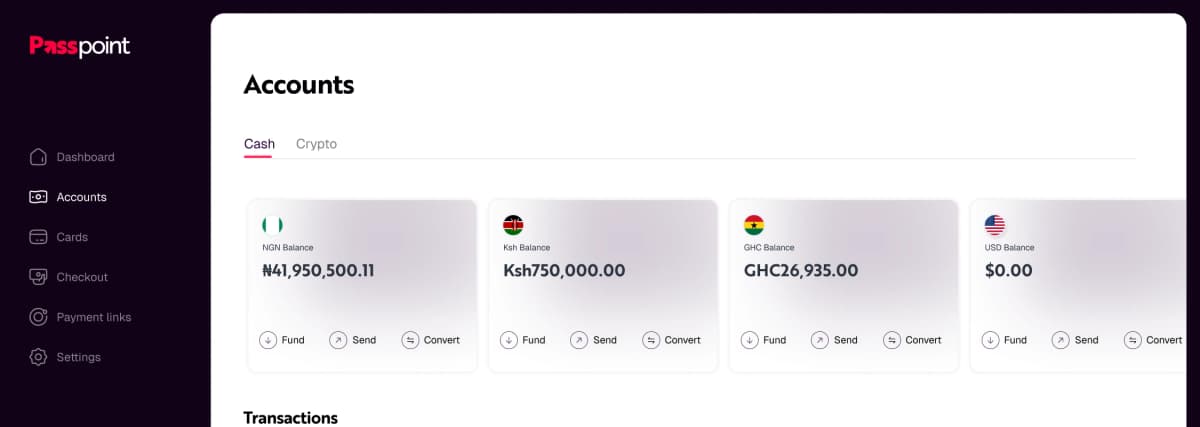
Passpoint's treasury layer is built specifically for this problem, providing institutional FX sourcing across African corridors, multi-currency balance management, and real-time settlement visibility that makes the cost of cross-border commerce more transparent, more controllable, and more aligned with what the underlying commercial relationships actually require. Click here to read the previous article in the series.