Interoperability Is Not Coming. It Needs to Be Built.
One in three remittance recipients can't cover essentials because their money is trapped in fragmented payment systems. Passpoint is building the interoperability layer that connects Africa's payment rails.
JUL 31 - 5 MIN READ

Every year, the same headlines appear.
More than 200 million migrant workers send money home. Nearly 800 million people rely on those remittances to pay for food, rent, school fees, and healthcare. Billions of dollars move across borders every month, powering households and entire economies.
Yet despite all the innovation in financial technology, one uncomfortable truth remains. Cross-border payments are still built on infrastructure that belongs to another era.
For the families waiting on the other side of a remittance, this isn't an abstract technology problem. It's the difference between paying school fees on time or owing the school. Between restocking a small business today or waiting until next week. Between receiving help during an emergency or hoping the money arrives before it's too late.
The irony is that many of the countries receiving these remittances have already solved payments at home. The problem begins the moment money crosses a border.
Two Worlds, Two Payment Speeds
Domestic payments have undergone a quiet revolution over the last decade.
Nigeria's NIP settles bank transfers in seconds. Kenya's M-Pesa transformed mobile money long before much of the world embraced digital wallets. Brazil's PIX became one of the fastest-growing real-time payment systems ever built. India's UPI now processes billions of transactions every month.
Across dozens of markets, instant payments are no longer an innovation. They're simply how money moves, until a payment crosses a border, and suddenly, everything slows down.
Instead of travelling across modern payment rails, money often moves through a chain of correspondent banks, intermediary institutions, multiple currency conversions, compliance checks, and settlement processes that were designed decades ago.
A transfer that would take seconds inside a country can take days once it becomes international. The technology already exists to move money faster, but the infrastructure connecting those technologies does not.
The Real Problem Isn't the Last Mile
For years, the remittance industry has talked about the "last-mile problem."
How do we get money into the hands of recipients? It's an understandable question. It's also becoming the wrong one.
Across Africa, the last mile already exists. Millions of people receive payments through bank accounts, mobile wallets, and instant payment networks. Platforms like M-Pesa, Airtel Money, Orange Money, MTN MoMo, and Nigeria's NIP have become deeply embedded into everyday financial life.
Recipients aren't waiting for digital access, they already have it. The real challenge is that these domestic payment systems were designed primarily for domestic transactions.
International remittance infrastructure was never designed to connect to them directly. Instead, payments often leave one modern system, travel through multiple legacy networks, and only reconnect with modern infrastructure at the very end of the journey.
Every intermediary adds another layer of cost, every intermediary introduces another delay, every intermediary takes another small piece of value away from the recipient.
Why Correspondent Banking Isn't Enough
Correspondent banking has been the backbone of international finance for decades. It works remarkably well for the purpose it was originally built to serve: moving large-value payments between financial institutions around the world.
But remittances are different. A nurse in London sending money to family in Lagos isn't making an institutional treasury payment.
A software engineer in Berlin supporting relatives in Kampala isn't conducting international trade finance. Yet both transactions often rely on the same infrastructure, that mismatch creates unnecessary complexity. It also creates unnecessary cost: the delays, fees, and lack of visibility that many consumers experience are not system failures.
They are the natural outcome of infrastructure designed for a completely different purpose.
What Interoperability Actually Means
Interoperability has become one of fintech's favourite buzzwords. Too often, it's reduced to discussions about messaging standards, APIs, or ISO 20022.
Those standards matter, but they aren't enough. Real interoperability means something much more practical. It means a payment initiated in one country can connect directly to trusted payment infrastructure in another without unnecessary detours. That requires three things.
First, direct integration with local payment rails rather than indirect access through multiple intermediaries. Second, regulatory credibility across every market involved, including licensing, compliance frameworks, and relationships with local regulators.
Third, a commercial model that benefits from removing intermediaries rather than depending on them. Without all three, interoperability remains an aspiration rather than an operational reality.
Africa Doesn't Need New Rails. It Needs Better Connections.
Sub-Saharan Africa received more than $54 billion in remittances in 2023.
Despite that scale, the region remains one of the most expensive places in the world to send money.
The average cost of sending $200 still exceeds 7%, more than double the UN Sustainable Development Goal target of 3%.
Ironically, this premium has very little to do with African payment infrastructure itself. Domestic payment systems across the continent have become increasingly fast, reliable, and trusted.
The problem lies between markets. It's the missing connectivity layer that forces modern payment systems to communicate through outdated international infrastructure.
The rails already exist, they simply aren't connected well enough.
Building the Missing Layer
This is the challenge Passpoint set out to solve, rather than creating another payment network, Passpoint connects existing ones.
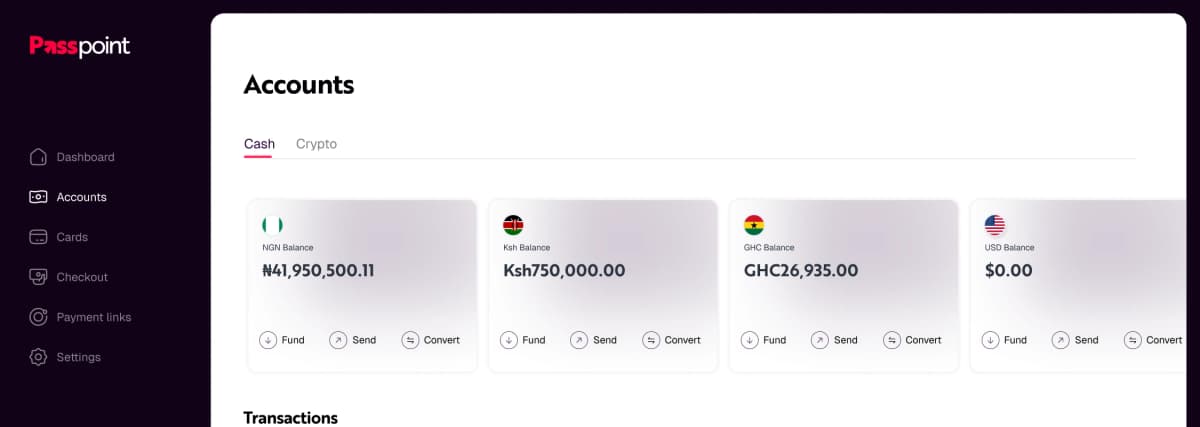
Its infrastructure enables remittance providers to access local payment rails across 42 corridors spanning Africa, Europe, and the G20 through a single API.
That includes Nigeria's NIP, payment infrastructure across Kenya, Tanzania, Uganda, Cameroon, the eight-country XOF region, Open Banking across 24 European countries and the UK, US payment rails, and digital asset on-ramp and off-ramp capabilities using USDC and USDT.
The objective isn't to replace domestic payment systems, it's to make them work together. When senders can connect directly to the rails recipients already use every day, payments become faster, more transparent, and more affordable.
That's what interoperability looks like in practice.
Infrastructure, Not Aspiration
For years, the payments industry has spoken about interoperability as though it were something that would naturally emerge over time.
It won't. Interoperability is not a policy announcement, it is not a messaging standard, it is not a future milestone. It is infrastructure.
The world's domestic payment systems have already evolved, and the next stage is ensuring they can communicate with one another just as efficiently across borders as they do within them.
The future of remittances won't be defined by who builds the next payment rail, it will be defined by who successfully connects the ones that already exist.
That is the infrastructure challenge ahead, and it is the layer Passpoint is building.